
Concrete, Flatwork and Foundations in the Flathead Valley
We pour concrete as a job of its own. You do not need to be building a house with us, and you do not need us for anything else. Driveways, patios, garage and shop slabs, foundations — if concrete is what you need, that is a job we will take.
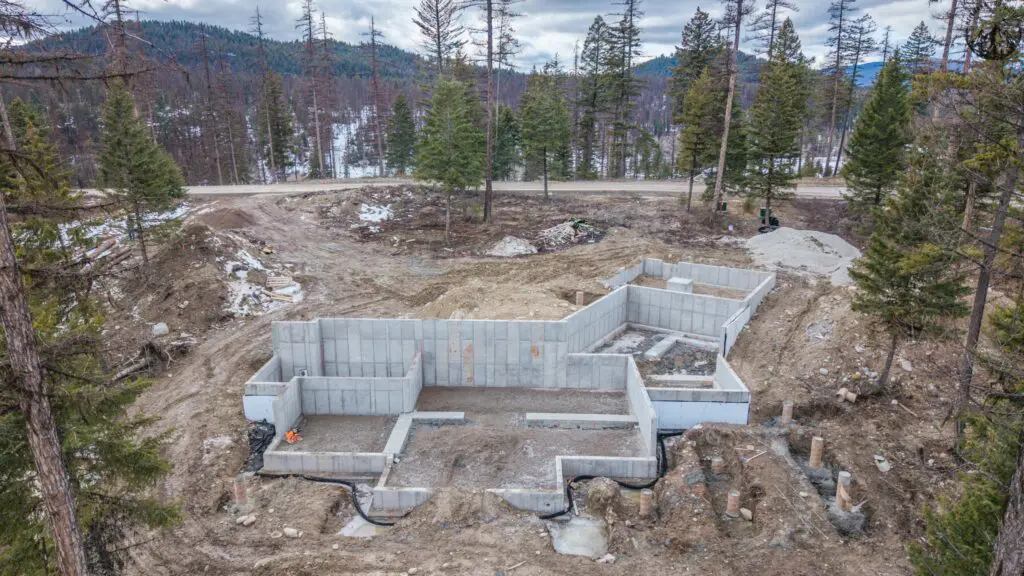
The part that matters most happens before the concrete arrives
Here is the thing most people do not know, and most of the trade does not advertise: the most important work in a concrete job is not the concrete.
It is the site prep. Base, compaction, drainage, and what is underneath before anything gets poured. That is what decides whether a slab cracks and settles, and it is the part that goes wrong. A perfect pour over a poor base is a slab that will fail. A modest pour over a properly prepared base will still be flat in twenty years.
It is also, awkwardly, not always something a concrete crew does. Plenty of outfits turn up to pour what somebody else prepared, and when it cracks, everyone points at everyone else.
We do the prep and the pour. One number, one person responsible for the result.
There is no honest way to list everything that can go wrong with concrete. But if you remember one thing before you hire anybody for this work, make it that question: who is doing the site prep, and are they the same people doing the pour?
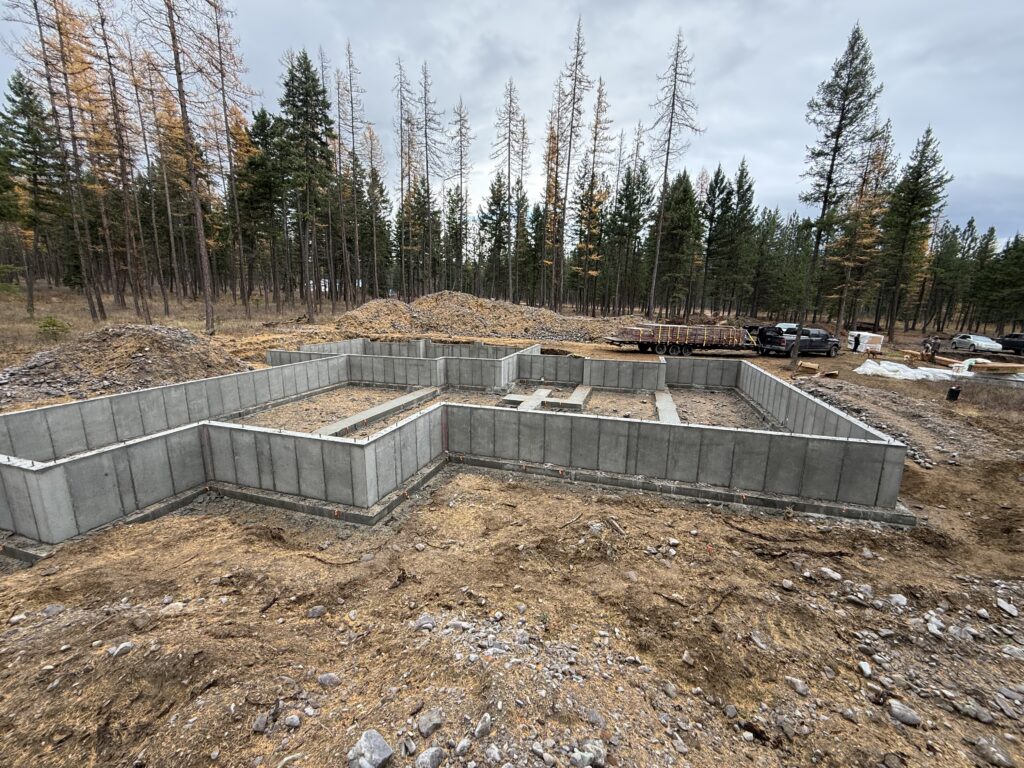
Slabs
We pour residential slabs to whatever thickness the project calls for, with one rule: we do not pour anything under four inches. Below that you are not building a slab, you are building a future repair.
Thicker where it is warranted. A slab carrying a hoist, equipment or regular truck traffic is a different slab from a patio, and we will tell you which one you are actually asking for.
Reinforcement. We use steel rebar as a rule. It is proven, it is what most work calls for, and it is cost-effective.
For specific applications we use fibreglass rebar instead. The reason is simple: steel can corrode inside concrete, and rust takes up more room than the steel it came from, so it cracks the concrete apart from the inside. Fibreglass has no metal in it and cannot rust. It costs more and it cannot be bent on site, so it is a deliberate choice for the right job rather than a default.
If you want it, say so and we will price it. If you are not sure, ask us at the site visit.
Patios
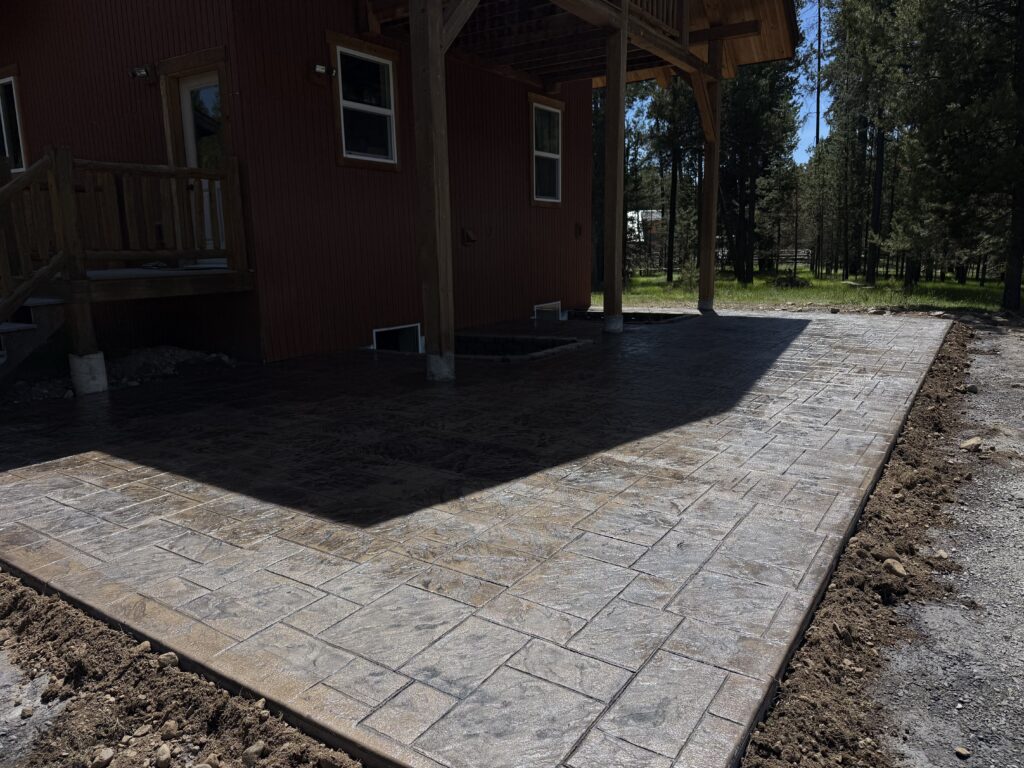
Patios are flatwork, and they are one of the most common things we are asked for. The same rules apply: the base decides how it ages, and four inches is the floor.
Finishes
We will do most finishes people ask for. Tell us what you want it to look like and we will tell you what it is going to be like to live with.
There is one we will not do: a smooth trowel finish outside. A power-trowelled slab is a lovely thing indoors, and indoors is where it belongs. Outside in this valley it turns into a sheet of ice the first morning it freezes, and it is not much better simply wet. That is a hazard, and we are not going to build one into your house for the sake of a look.
Exterior flatwork gets a broom finish, for the plain reason that you have to walk on it in February.
If somebody offers to trowel your driveway smooth, ask them what happens when it frosts.
Foundations
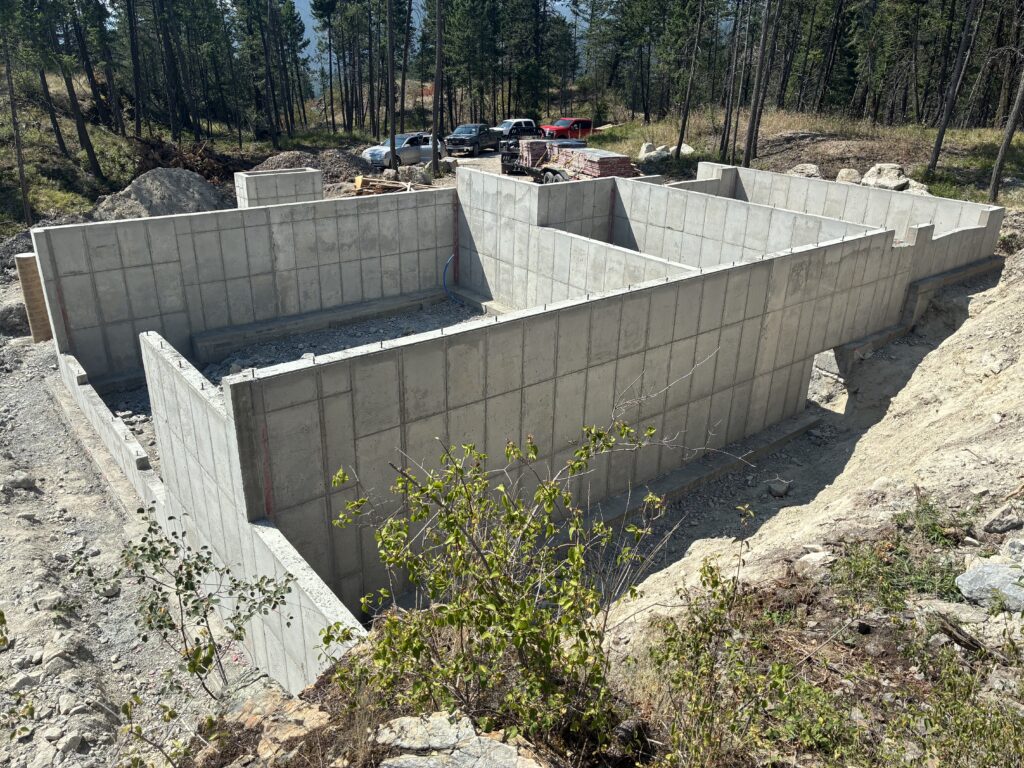
We pour foundations as a standalone job as well — footings and stem walls, for your own build or for a builder who needs them done properly.
Footings go below frost depth for the site. In this valley that is not a detail you get to economise on, and it is the reason we want to see the ground before quoting anything.
Who we pour for
Homeowners, and other contractors who need concrete on their own jobs. Most of our concrete goes into buildings we are putting up ourselves, but it is a service of its own and we are glad to take it on its own.
When we pour
Exterior flatwork in this valley has a season, and anybody who tells you otherwise is either charging you for it or hoping you will not notice.
Roughly mid-November to March we do not pour exterior flatwork. The ground and the weather decide that, not us, and pouring outside that window to keep a customer happy is how you get a slab that fails in its first winter.
Plan accordingly. If you want a driveway next summer, the conversation to have is in winter, not in June when everyone else is calling.
Commercial and structural concrete
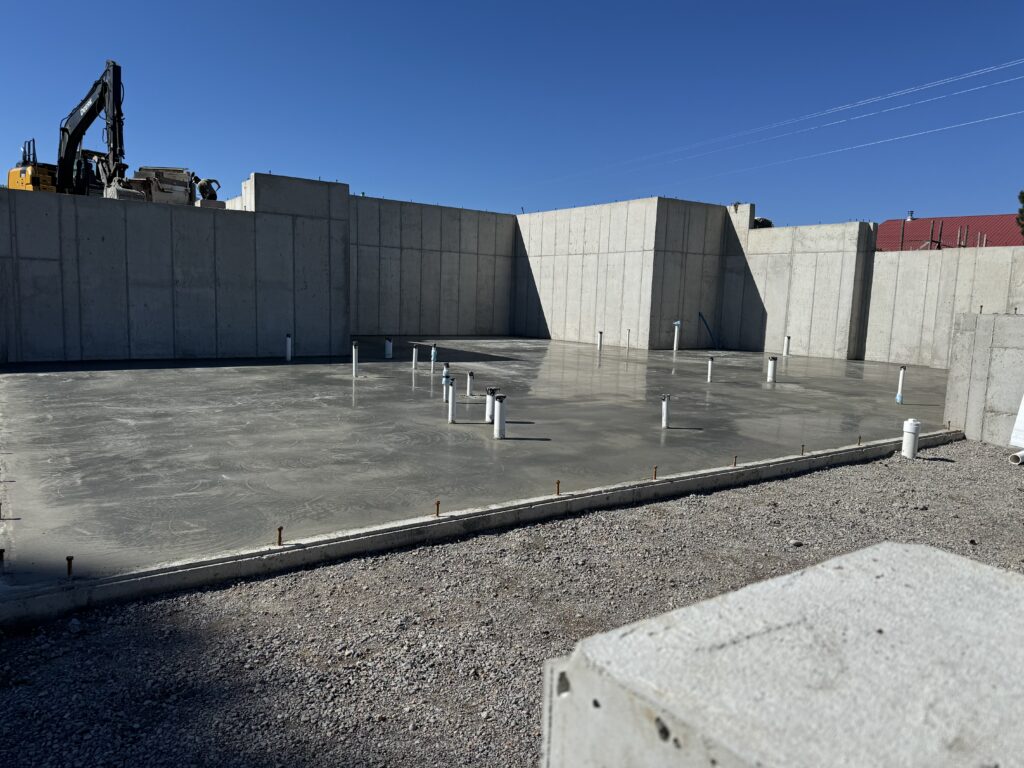
Alongside house foundations and flatwork, we take on commercial and structural work with a crew we partner with on larger pours — footings, foundation walls, below-grade structures and slabs at a scale most residential outfits do not handle.
If you are a general contractor, a developer or a business owner with concrete to put in the ground, tell us what the job is and we will tell you plainly whether it is one for us. We would rather pass on a job than be the reason yours is late.
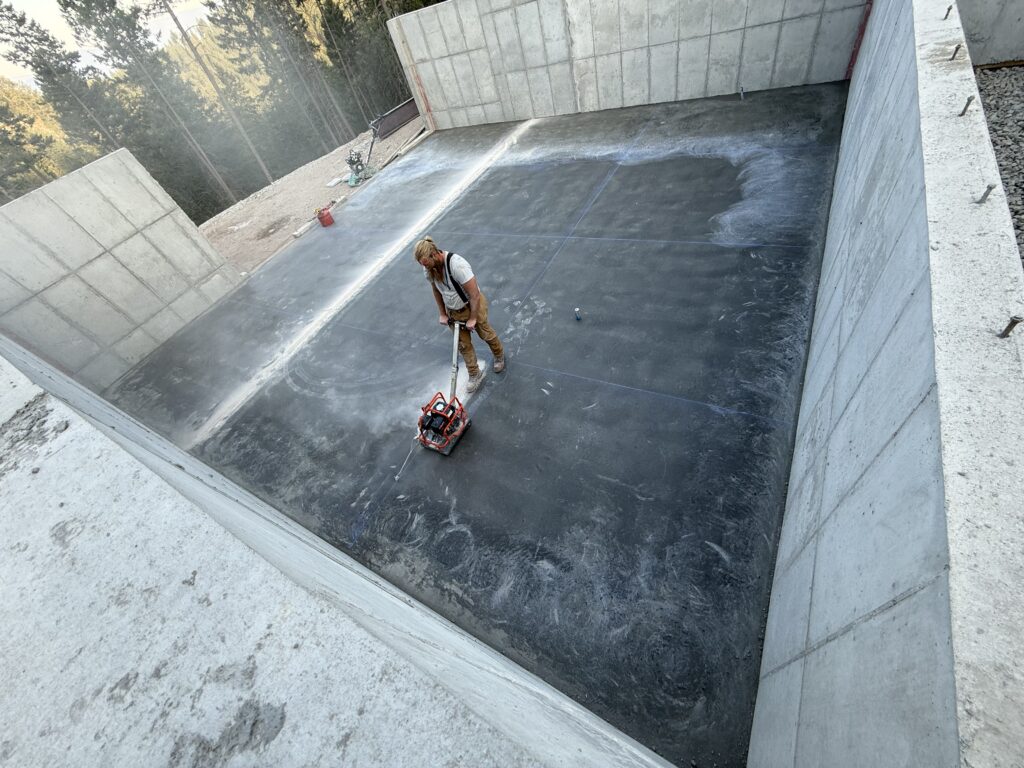
Commercial work is quoted after a site visit and a look at the drawings. There is no square-foot number worth printing for it.
How we price it
We do not publish a square-foot rate for concrete, and you should be wary of anyone who does. Two pours of the same size can be a long way apart on price before anybody picks up a trowel.
What actually sets the number:
- Site prep. Flat and dry, or a cut and fill with drainage. The biggest single swing, every time.
- Access. Whether a truck can reach the pour or whether it has to be pumped or barrowed.
- What the concrete has to carry. Thickness and reinforcement follow the load, not the square footage.
- Forms and complexity. A rectangle is not a stepped footing, and a wall is not a slab.
- Finish. Broom, stamped, exposed aggregate. Decorative work takes longer and takes more care.
- Season. Shoulder-season pours carry costs a July pour does not.
We come and look at the site before we give you a number, and the number comes to you in writing with what it excludes written down. The visit is free.
Where we work
Throughout Flathead County — Kalispell, Whitefish, Columbia Falls, Bigfork, Lakeside and Creston.
Start with a site visit
Tell us roughly what you want poured and where. We will come and look at the site, talk through what the ground is going to need, and give you a number in writing. The visit is free.
See also garages, shops and barns and pole barns and post-frame buildings.