
Drywall in Kalispell and the Flathead Valley
Hanging, taping, texture and repair. New work, remodels, and the ceiling that got wet last February.
Who does the work
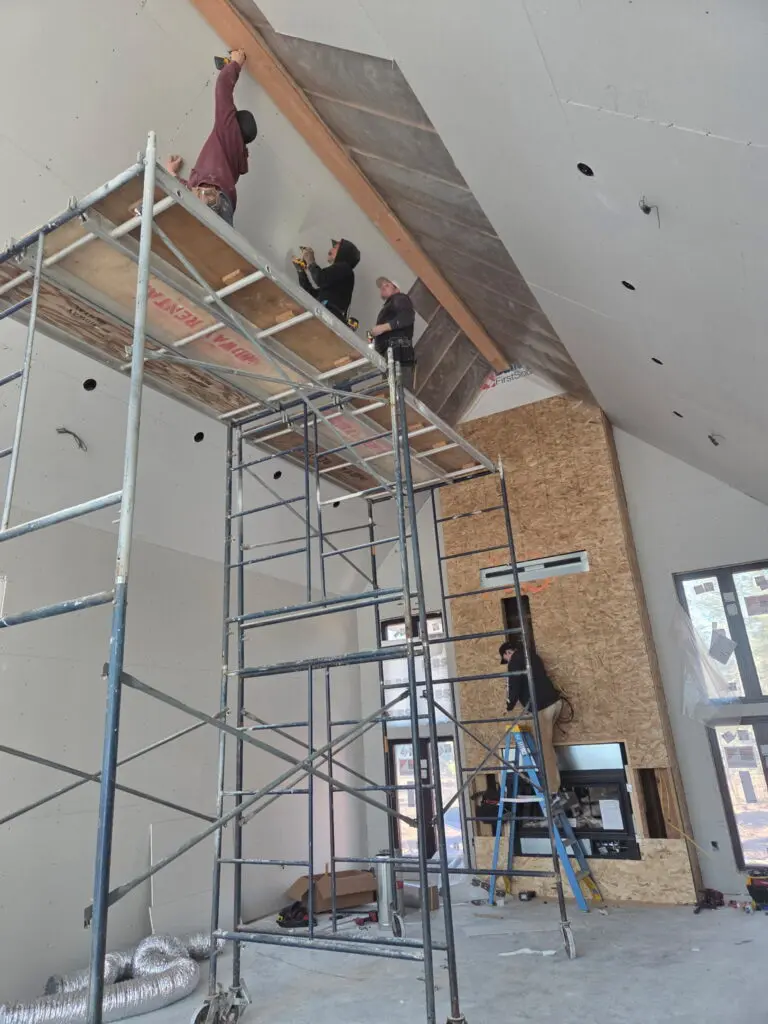
The same drywall crew we use on our own builds. Not whoever is cheapest this week — the people we already trust on houses we are responsible for.
That matters more than it sounds. Hire a drywall crew direct and you own the seam between trades. When the texture does not match what the painter expected, or a joint shows up after the heat goes on, you are the one making phone calls and listening to two trades each explain that it was the other one.
We carry the whole thing. One number, one person responsible.
Texture
Orange peel is the most common texture here and the one we do most of.
Where we can, we lean toward a light texture. It takes less sanding, which means less dust and a cleaner job for you, and it reads closer to a smooth wall without the cost of one. Some people in the trade call it the poor man’s smooth wall, which is unkind but not far off: you get most of the look for a fraction of the labour.
If you are patching into an existing wall or ceiling, tell us what is on it, or let us come and look. We will tell you honestly whether we can match it — and we would rather say up front that a wall needs retexturing corner to corner than hand you a patch you can see from the doorway.
Dust
Two different answers, depending on the job.
New construction: we do not do dust control, and you should not pay for it. There is nothing in the house to protect yet. Sealing off an empty shell is theatre.
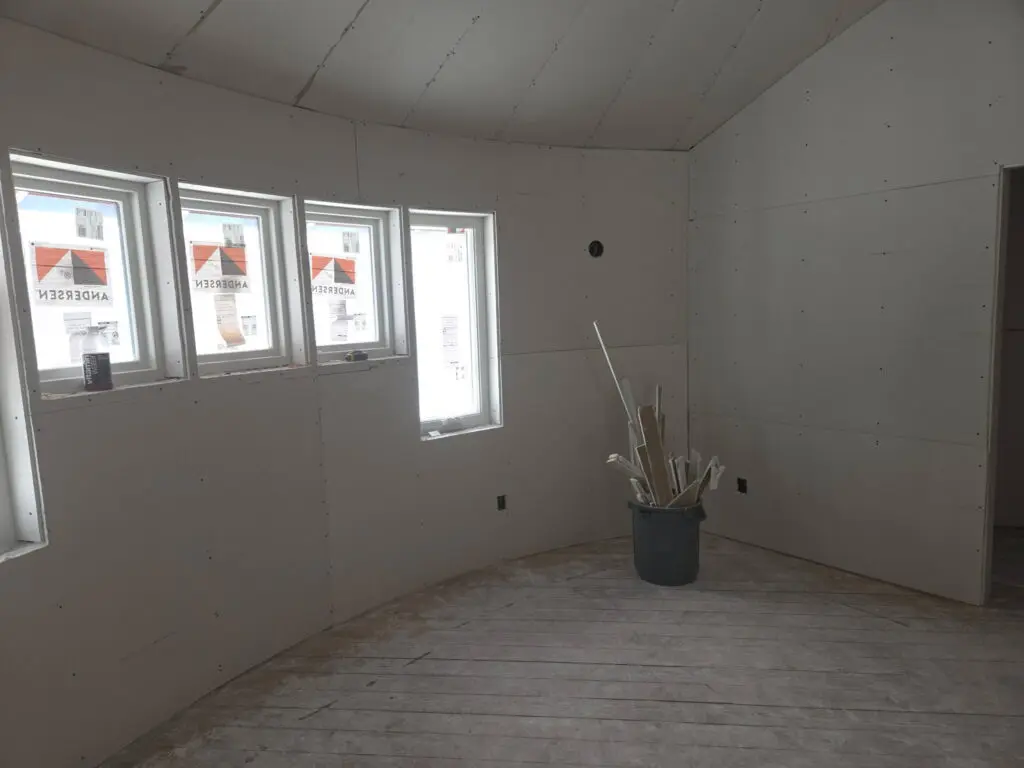
Remodels, where you are living in the house: we work the other way round. Rather than chase the dust after it is made, we use compounds that need less sanding, so there is less dust to begin with. We can run air filters in the work area as well.
Less dust made beats more dust chased, and the house stays liveable while the work is going on.
Heat, and whose job it is
This is the part that causes arguments after the fact, so here it is plainly.
A house needs to be heated before drywall goes up, and it needs to stay heated after the crew leaves. Mud cures, and it cures badly in a cold house. Board hung cold and mud that cures slowly or freezes is how you end up with cracked joints and seams that appear months later, long after everyone has gone home.
Heating is not usually the drywall crew’s job. On most jobs it falls to the homeowner or the general contractor — and plenty of people find that out afterwards, when the finish has already gone wrong and nobody mentioned it beforehand.
We can provide heat if the power on site will carry it. More to the point: when we are running your job, the heat is our problem and not something you were supposed to know about. That is most of what you are paying a contractor for.
What it costs
$2.50 per square foot of drywall, installed. That is the base price and it covers materials, hanging, taping and texture.
Square foot of drywall is not the same as square foot of house. A house has walls and ceilings, so there is a good deal more board than floor. As a working figure:
A 3,000 square foot house with 9 foot ceilings comes out around $35,000.
Things that move it:
- Ten foot ceilings cost a little more. Not because the work is harder, but because of how sheets have to be cut. There is more waste.
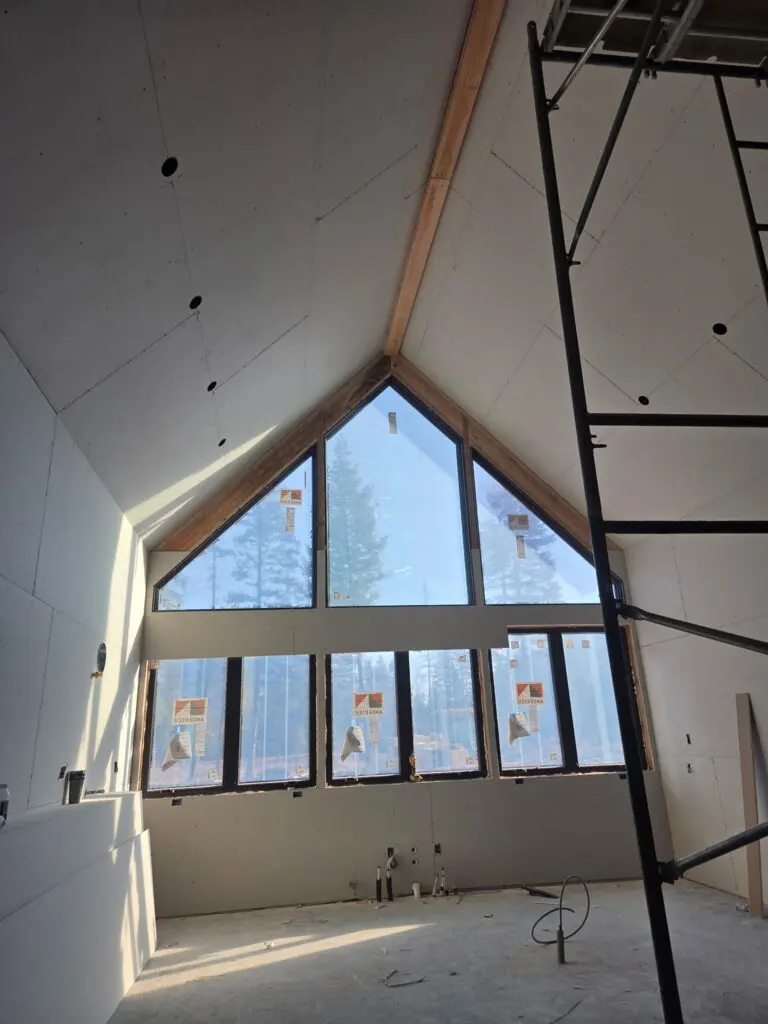
- Pop-up and vaulted ceilings are priced separately. They take longer and they take more care.
- Window wraps: about $85 for a four-way wrap, $65 for a three-way, per window. They add up on a house with a lot of glass, and most people never think about them until the estimate arrives.
Smaller jobs generally start around $4,000. Below that the setup costs more than the work, and you are better off calling somebody for a single patch.
Everything above is a starting point rather than a quote. We come and look before we give you a number in writing, and the visit is free.
Licensed and insured
Montana Construction Contractor registration CCP-CCL-LIC-0315274.
Where we work
Throughout Flathead County — Kalispell, Whitefish, Columbia Falls, Bigfork, Lakeside and Creston.
Start with a site visit
Tell us what needs doing. We will come and look, and give you a number in writing. The visit is free.